Agentic AI
- 2021CompletedAI literacy in cohorts
- 2026CompletedAI in Romania · launch
- 2030GoalAI agent for citizens · pilot
- 2035GoalR&D Hub · 20+ prototypes, 500+ researchers
- 2040GoalRegional centre for ethical and civic AI*
Direction B · 2026–2027
AI assistants for citizens, care and ethical research. Technology that helps people, not the other way round.
Results & objectives · 2021 → 2040
Completed = 2021–2026, public figures. * 2040 goals proposed by the association, currently being validated.
The cause · why this programme exists
European law already requires AI literacy, and Romania has the lowest use of AI in the EU. We make it accessible to young people and small communities.
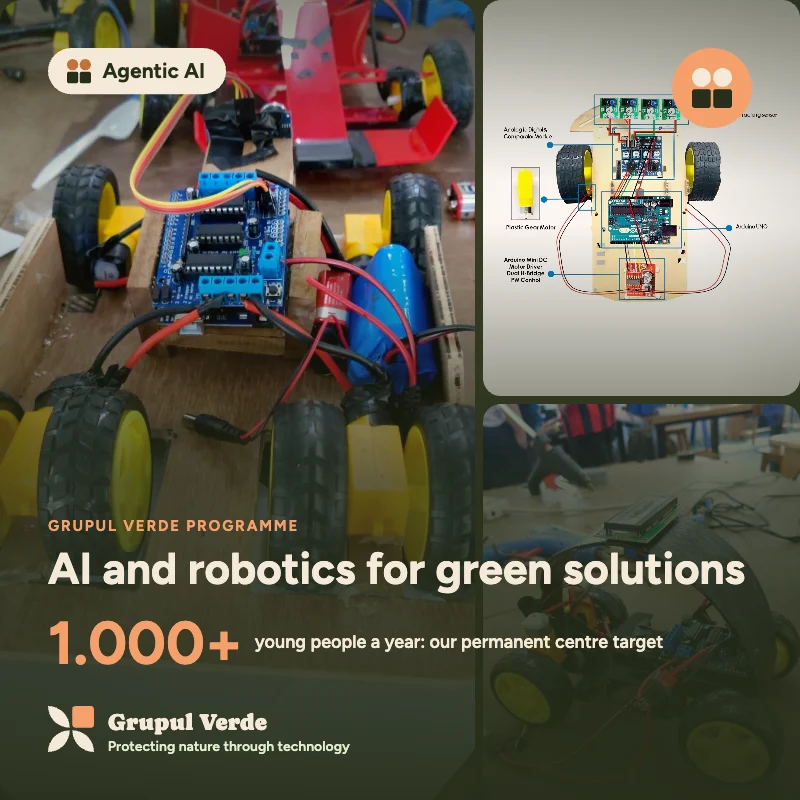
From the field · 6 images
Real activities with real young people. Tap an image to see it full size, then share it — every share brings a new supporter.
What we actually do
Guides citizens through their rights, public services and administrative procedures.
Monitoring the wellbeing of older people and coordinating carers.
Studies and guides on the responsible use of AI in civic, educational and medical settings.
Our role · how we work
We build AI assistants that are useful to the community and teach young people to use them responsibly.
Who we work with
The specialist profiles we start and run the activities with. Their names appear in the project reports.
Turning pixels into oxygen
“Pixels become hands. Hands lift people up.”
Extended through the Social Innovation Lab
This programme feeds directly into the Social Innovation Lab initiatives, built on European models.
What we hope for · how you can help
Help us turn prototypes into solutions for the community.
Computing equipment and licences for the prototyping lab.
Donate →Engineers and researchers who work with young people on prototypes.
Become a mentor →Applied research and data for projects with social impact.
Propose a partnership →Workstations and local servers for the R&D Hub.
Donate equipment →Support the programme
Sources and methodology
Our own figures (young people trained, schools, localities) come from the association’s records and are published in the impact report. Context statistics come from official sources, with the year of the latest available edition.