ASOCIAȚIAGrupul Verde

Pillar 02 · Environment

Environment & biodiversity.

The BGCI network, iNaturalist, Natura 2000. Monthly expeditions in the Vrancea Subcarpathians. Climate literacy, biodiversity, water and air quality — measured with sensors the young people build themselves.

  • BGCI
  • iNaturalist
  • Natura 2000
  • Learning for Nature
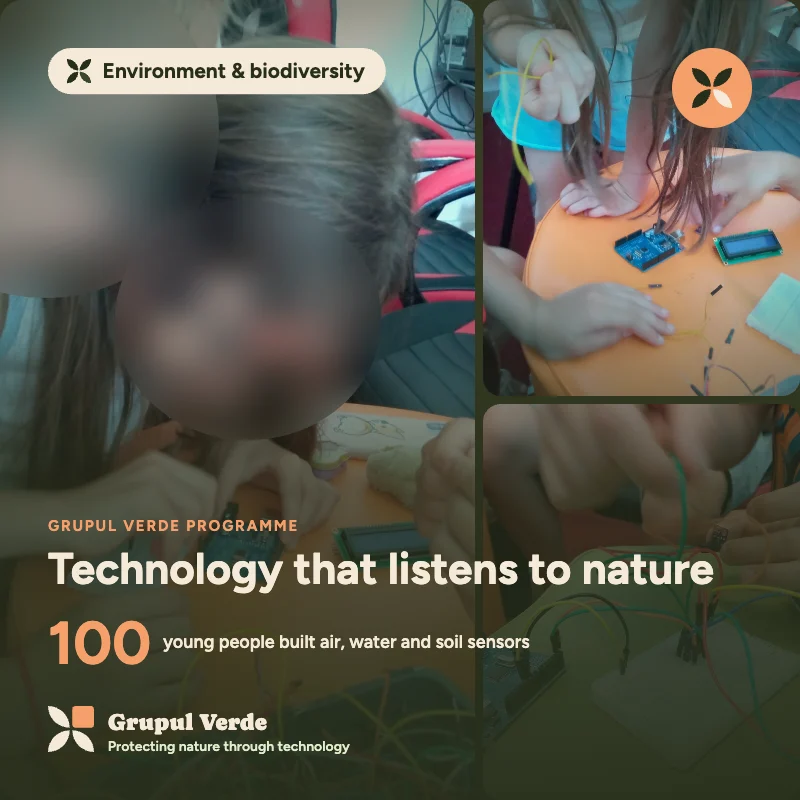
Technology that listens to nature. Environment & biodiversity, Environment & biodiversity · Asociația Grupul Verde.
100young people have built air, water and soil sensors
Monthlyexpeditions in the Subcarpathians
Cost 0for every young person on the expeditions

The cause · why this programme exists

Vrancea’s nature needs young researchers.

The air, the water and protected areas are changing before our eyes, and science is hard to learn from a textbook. Our young people learn it in the field, with sensors they build themselves.

22,7%

of Romania’s land is protected through the European Natura 2000 network

European Commission, Environmental Implementation Review, 2022 · [1]
66%of Romanians consider climate change a very serious problemSpecial Eurobarometer 565, 2025 · [2]
46%of Romanian 15-year-olds are below the baseline level in scienceOECD, PISA 2025, 2025 · [3]

From the field · 8 images

This is Environment & biodiversity.

Real activities with real young people. Tap an image to see it full size, then share it — every share brings a new supporter.

Eco Tech Kids

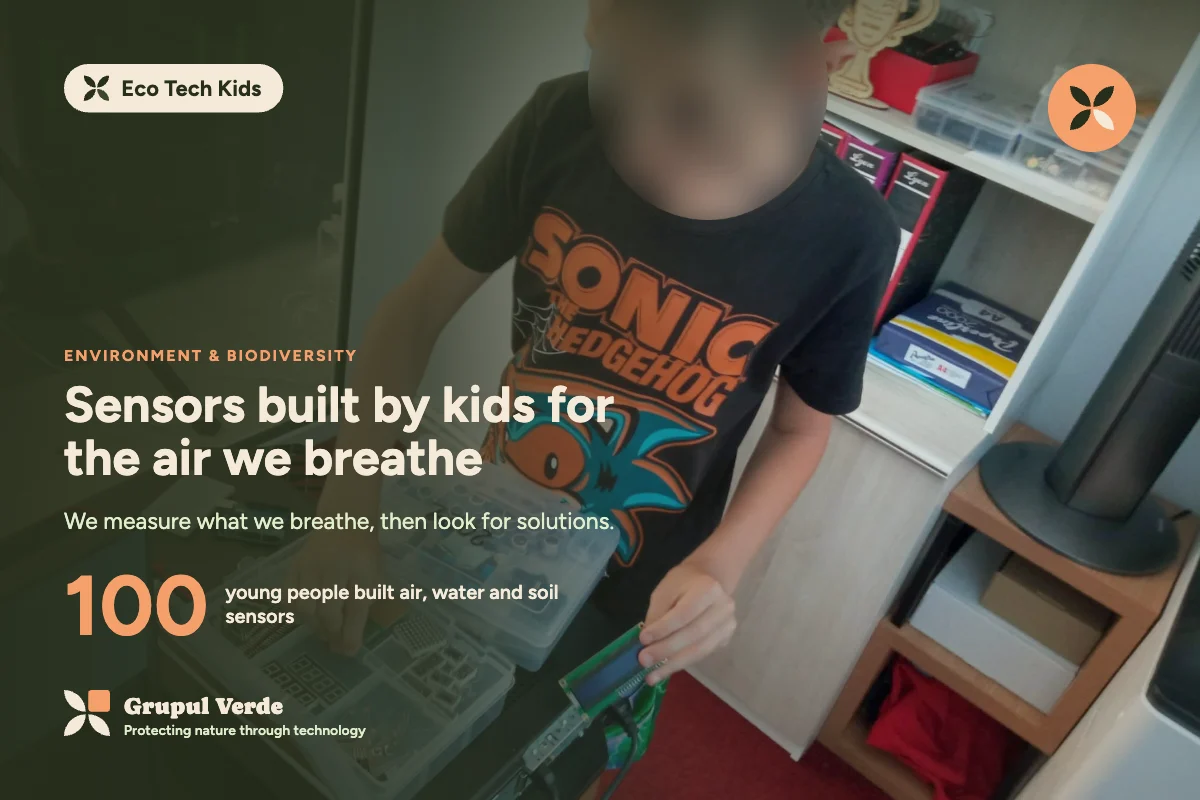
Sensors built by children for the air we breathe

Eco Tech Kids

A soil sensor knows when the plant needs water

Eco Tech Kids

Climate research, as a team, around one table

Sensors in Protected Areas

Prototypes for monitoring protected areas

Code & Climate

Young people write code for climate solutions

Sensors in Protected Areas

The circuit that turns data into environmental alerts

Code & Climate

Climate solutions coded by young people

Sensors in Protected Areas

IoT sensors for protected areas

Results & objectives · 2021 → 2040

The programme’s path to 2040.

Completed 2021–2026Goal 2030–2040

Environment & biodiversity

  1. 2021CompletedStarted in 2023 · BGCI
  2. 2026Completed100 young people built sensors · monthly expeditions
  3. 2030GoalSensors in protected areas · first stations
  4. 2035Goal100+ IoT sensors in Natura 2000 sites
  5. 2040GoalMonitoring in every Natura 2000 site in Vrancea*
Completed = 2021–2026, public figures. * 2040 goals proposed by the association, currently being validated.

100%
100 young people have built sensorsAir, water and soil · Eco Tech KidsObjective achieved
100%
Monthly expeditions in the SubcarpathiansActive programmeObjective achieved
0%
0 of 100+ IoT sensors in Natura 20002035 target · first stations in 2030Starts in 2030

✓What we have achieved

  • 100 young people have built air, water and soil sensors
  • Monthly biodiversity expeditions in the Vrancea Subcarpathians
  • Field research and species recording on iNaturalist
  • Prototypes for monitoring protected areas

→What remains to be done

  • The first monitoring stations in protected areas (2030)
  • 100+ IoT sensors at Natura 2000 sites (2035)
  • Monitoring in all Natura 2000 areas in Vrancea (2040)*
  • Open environmental data, published for the community

What we actually do

Science happens in the field.

BGCI-affiliated research

BGCI-affiliated field research in the Vrancea Subcarpathians, with sensors built by young people.

iNaturalist

Young people map and record local biodiversity.

Sensors built by children for the air we breathe. Eco Tech Kids, Environment & biodiversity · Asociația Grupul Verde.

Eco Tech Kids

Arduino & Micro:bit · 100 young people building air, water and soil sensors — climate literacy through hands-on research, not textbooks.

Climate literacy

Vrancea is already experiencing prolonged droughts, landslides and biodiversity loss in the Subcarpathians. We turn this emergency into hands-on research.

Our role · how we work

We turn care for nature into data and solutions.

Young people don’t just learn about the environment — they measure it, record it and propose solutions.

  1. Local diagnosisWe start from data: the schools, the villages and the real needs of young people in Vrancea.
  2. A programme built with expertsCurriculum and activities designed together with specialists and teachers.
  3. Training & equipmentWe bring kits, laptops and mentors wherever they are missing.
  4. Working in the communityFree, hands-on activities at school, in the village or out in the field.
  5. Measurement & public reportingWe count the results and publish them — verifiable figures, not promises.

Who we work with

The experts beside the children.

The specialist profiles we start and run the activities with. Their names appear in the project reports.

Biologists and ecologistsGuide field research and species identification.Involved from the start
IoT and electronics engineersDesign the air, water and soil sensors together with young people.Involved from the start
Science teachersLink fieldwork to what is taught in class.Involved from the start
Protected area guidesEnsure expeditions are safe and respectful of nature.Involved from the start

Turning pixels into oxygen

“A prototype built in Adjud can change the way a village breathes.”

Asociația Grupul VerdeEnvironment & biodiversity

Extended through the Social Innovation Lab

What we build next.

This programme feeds directly into the Social Innovation Lab initiatives, built on European models.

What we hope for · how you can help

One expedition, one sensor, one village that breathes better.

Help us take more young people into the field and more sensors into nature.

Donation

Fund a biodiversity expedition

Transport, equipment and materials for one day of field research.

Donate →
Equipment

Sensor kits

Arduino and micro:bit boards, air and water quality sensors.

Donate kits →
Volunteering

Volunteer biologists and guides

One outing a month with young people makes a difference.

Become a volunteer →
Partnership

Protected area managers

We would like partners to help site the first monitoring stations.

Let’s talk →

Support the programme

Fund an expedition for biodiversity.

Sources and methodology

Where the figures come from.

Our own figures (young people trained, schools, localities) come from the association’s records and are published in the impact report. Context statistics come from official sources, with the year of the latest available edition.

  1. Share of Romania’s land area covered by Natura 2000 sitesEuropean Commission, Environmental Implementation Review · SWD(2022) 271 · 2022. View source ↗
  2. Romanians who consider climate change a very serious problemSpecial Eurobarometer 565 · 2025. View source ↗
  3. 15-year-olds below the baseline level in science, Romania (OECD average: 26%)OECD, PISA 2025 · 2025. View source ↗